
How to Check Criminal History in Jefferson County
Jefferson County does not offer one search that joins every criminal record. Begin with Idaho iCourt for general case information, but treat a name result as a lead rather than proof of identity. The live portal needs JavaScript and cookies, and its public shell did not expose a stable field list during research. Record the filing county and exact case number when a likely match appears.
Then follow the event to its source. The Jefferson County court clerk supplies the filed case documents. The sheriff or Rigby Police supplies its own incident report. VINE shows current custody events, while BCI supplies the fingerprint-supported Idaho history. Use a full legal name, known aliases, date of birth, incident date, location, and case number where available.
- Search iCourt for the case and confirm that Jefferson is the filing county.
- Ask the clerk for the chronological summary, charging paper, orders, judgment, and disposition.
- Contact the arresting agency for its separate incident or arrest report.
- Use VINE or the jail phone line for present custody, then IDOC for state custody or felony supervision.
- Order a BCI name or fingerprint check when an Idaho repository history is needed.
Jefferson County's Two Record Addresses
Two adjacent addresses divide the county record system. Court files, the clerk, prosecutor, probation, and public defender are based at 210 Courthouse Way in Rigby. Sheriff incident reports, arrest material, booking records, and jail records begin next door at 200 Courthouse Way. A request sent to the wrong building may reach an office that never created the desired file.
The Jefferson County government homepage shows the compact county complex and its department paths.
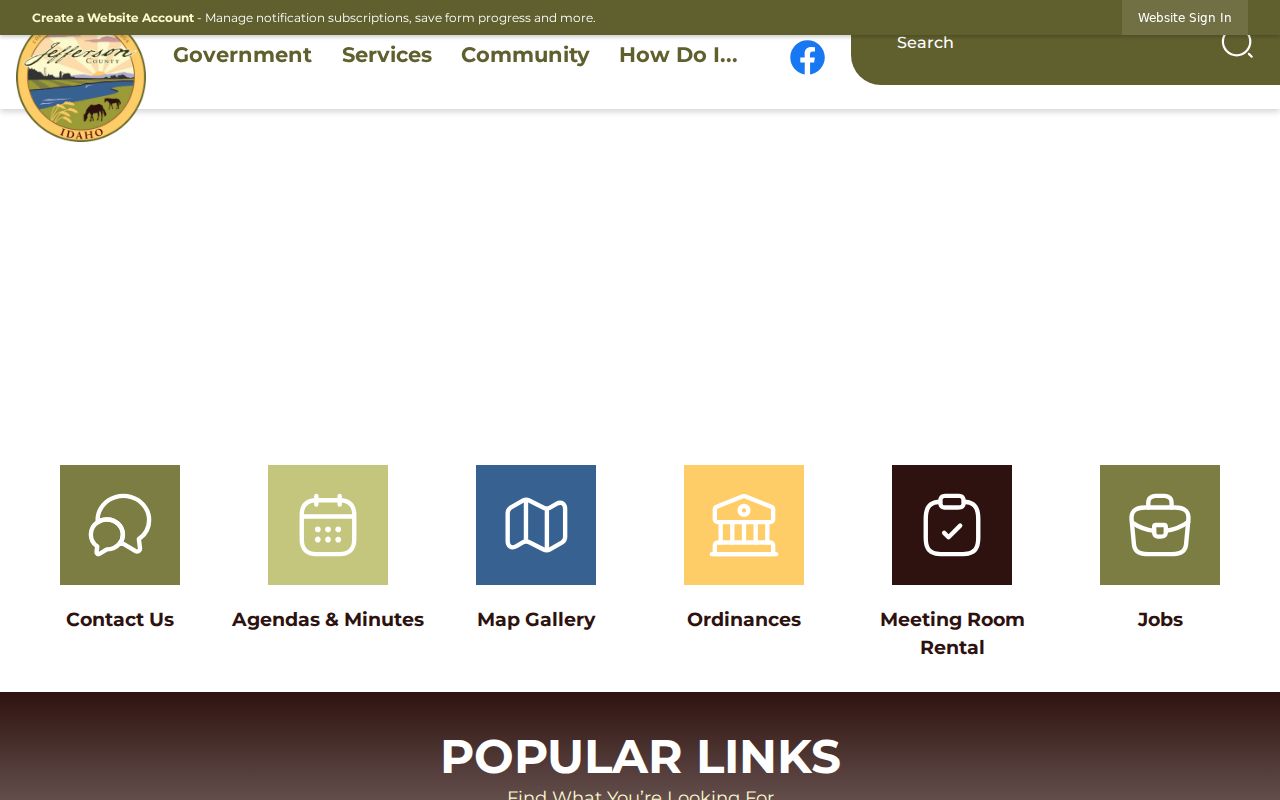
The image reinforces a key records lesson: offices may share a campus while their files remain separate.
Jefferson County Courts
210 Courthouse Way, Suite 120
Rigby, ID 83442
208-745-6313 option 3
Monday-Friday, 9 a.m.-5 p.m.
Jefferson County Sheriff
200 Courthouse Way
Rigby, ID 83442
208-745-9210
Records: records@co.jefferson.id.us
Official Idaho Background Checks
The Idaho State Police Bureau of Criminal Identification maintains the Idaho Central Repository. It has no instant public name-search portal. Instead, a requester submits the BCI name-based or fingerprint-based form. The name check uses identifiers and may confuse people who have similar names. A fingerprint check links the request to one person and is the stronger route for reviewing your own Idaho record.
The repository covers fingerprint-supported Idaho felony and serious-misdemeanor arrests plus dispositions reported to BCI. It does not supply other states, federal cases, or a full Jefferson County court file. Results are sent by mail, not by phone, fax, or email. Requests may be mailed, faxed, or delivered to BCI, though fingerprints must accompany the fingerprint form.
The official BCI instructions display current routes and fee notices.
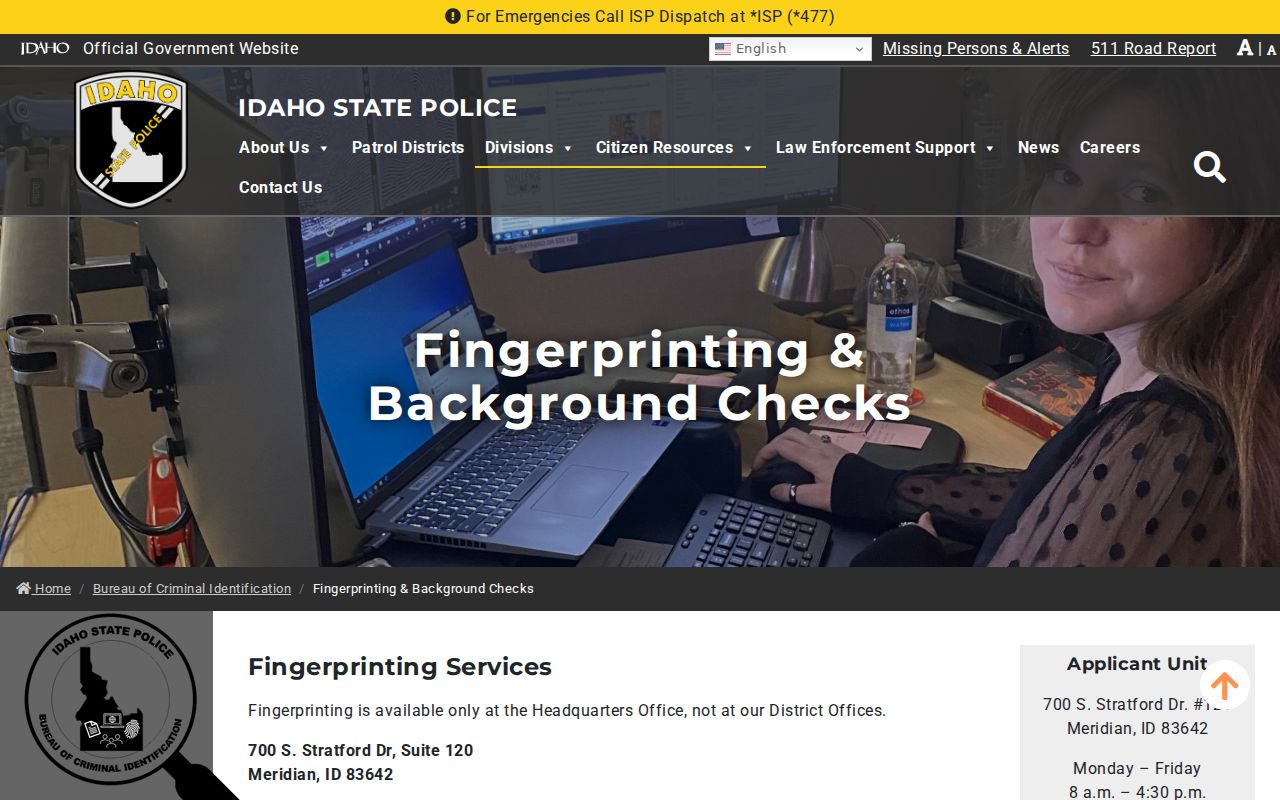
This state page should control when an older downloadable form shows a stale amount.
| BCI service | Current amount | Main distinction |
|---|---|---|
| Name-based history | $20 | Identifier match; Idaho records only |
| Fingerprint-based history | $25 | Positive identity; Idaho records only |
| BCI fingerprint card | $10 first, $5 additional | Ink-and-roll at Meridian headquarters |
Jefferson County's No-Database Lookup Ladder
Several high-interest Jefferson County records have no local public search. The county publishes no daily booking log, arrest blotter, public warrant list, most-wanted page, or sheriff app. That absence is not proof that a record does not exist. It means the reader must use the public phone and request chain.
For a recent arrest, call the sheriff or jail, register with Idaho VINE through Jefferson County, and request the existing booking material from JCSO. Search iCourt for a filed case. For a warrant, call Jefferson Courts and JCSO, review the underlying iCourt case, and submit a focused request when disclosure is lawful. Unreturned warrants and supporting affidavits can be withheld under court rules.
Access flow: agency phone or form › VINE for custody › iCourt and clerk for filed charges › BCI for Idaho history.
Types of Criminal Records
Each Jefferson County record captures a different stage. An officer's report describes what the agency received, observed, and did. The jail file focuses on intake and custody. A court file begins when charges are filed. BCI compiles qualifying fingerprint events and reported outcomes. None should be treated as a substitute for all the others.
- Incident and arrest reports: held by JCSO, Rigby Police, or ISP, depending on who handled the event.
- Booking and custody records: created by Jefferson County Jail and checked for current status through VINE.
- Criminal court cases: held by the Jefferson clerk, with general information in iCourt.
- BCI histories: fingerprint-linked Idaho arrest cycles with reported dispositions.
- Supervision and registry records: split among Jefferson Probation, IDOC, and the Idaho registry.
Jefferson County VINE Is Not an Archive
Jefferson County directs the public to Idaho VINE because the jail does not publish a roster. VINE is a free custody-notification system, not a historic booking profile. A person may register phone or email contacts, choose a four-digit PIN, and receive notice of release, transfer, or escape. Calls can arrive overnight and repeat until the PIN confirms receipt or the retry period ends.
The official IDOC Resident/Client Search shows the later state custody and supervision layer.
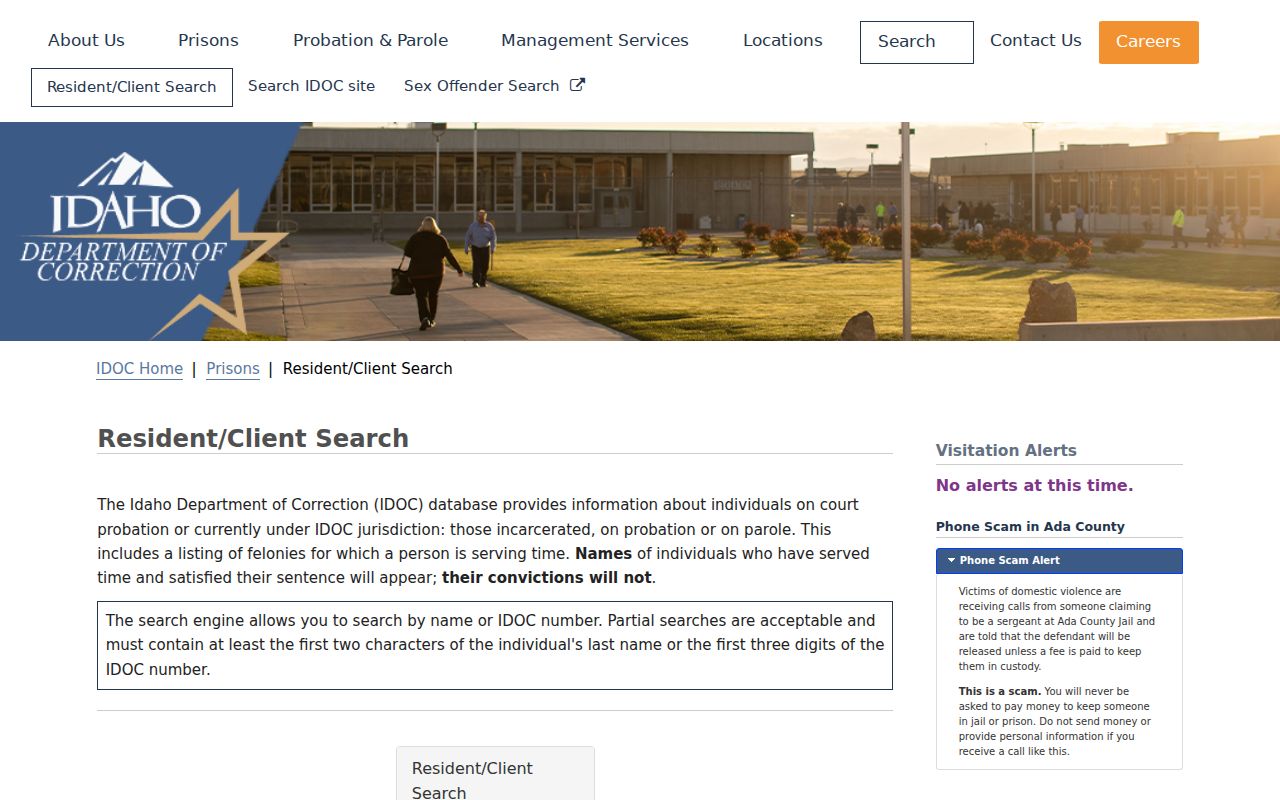
Once a person enters state custody or felony supervision, the IDOC Resident/Client Search becomes the relevant public layer.
IDOC accepts a last name or IDOC number, with optional first name. Results may show status, location, sentencing county, case number, supervision dates, and parole data. Updates occur daily, but status can change more quickly.
What a Jefferson County Criminal Record Shows
The fields depend on the record source. A Jefferson County court file may show the party index, case number, dated events, hearings, motions, orders, judgment, sentence, and financial entries. A BCI history instead arranges identifiers and fingerprint-supported arrest cycles with charges and any reported court outcome. A jail record is narrower and centers on intake and custody.
| Name and identifiers | Legal name, aliases, birth data, and other lawful matching details, with sensitive digits redacted from public court views. |
|---|---|
| Arrest or booking | Agency, date, intake event, listed arrest charge, custody status, and fingerprints where created. |
| Charges and statutes | The accusation at arrest or the later filed complaint, information, or indictment. |
| Disposition | Dismissal, acquittal, plea, verdict, or other result recorded by the court. |
| Sentence | Custody, probation, fines, restitution, or other ordered terms. |
| Supervision status | County misdemeanor supervision or IDOC felony probation, parole, or custody details. |
Electronic court filings show only the last four digits of protected account and identification numbers and only the birth year publicly. Presentence reports and risk assessments are commonly restricted.
From Jefferson Booking to BCI
An arresting agency first creates an incident and arrest report. If Jefferson County Jail books the person, jail staff create intake, custody, photo, and fingerprint records. Submission of the arrest fingerprint card starts the Idaho BCI arrest cycle. The prosecutor and court then create charging papers, orders, judgment, sentence, and disposition.
Record flow: Arrest report › Jefferson County booking › BCI fingerprint cycle › prosecution › court disposition › BCI update.
Reporting gaps matter. An arrest may stay in local files if the fingerprint card never reaches BCI. A court outcome may also be missing from the repository until corrected. For self-review, compare the clerk's final order with a fingerprint BCI result and supply certified source documents when challenging an error.
Public Access Laws
The Idaho Public Records Act governs county and police agency records, while Idaho Court Administrative Rule 32 separately governs judicial files. The JCSO form asks for an existing record described with useful detail. An ordinary agency response is due within three working days, or the office may provide notice that more time is needed. Court requests use a similar three-day response or referral rule, with a ten-working-day outside response after notice.
Key Idaho access rules:
Idaho Code §74-102 permits inspection and copying and sets fee limits.
Idaho Code §67-3008 governs access to and redisclosure of BCI history.
Idaho Court Administrative Rule 32 controls court access, redaction, sealing, and exemptions.
Idaho Code §67-3004 authorizes narrow expungement and Clean Slate shielding.
Public access still has limits. Active investigations, juvenile data, protected victim information, presentence material, pending warrant records, and sealed or shielded cases may be withheld or redacted.
Jefferson Sheriff's Three-Day Form
The JCSO public-record request form may be delivered in person or by mail to 200 Courthouse Way, emailed to records@co.jefferson.id.us, or faxed to 208-612-6006. It asks for the incident date, location, parties, case number if known, and a clear description. A requester can ask to inspect or obtain copies.
JCSO provides records that already exist. It does not create answers to questions. The form states that the office ordinarily approves or denies within three working days. Once notice is sent, the requester has five working days to collect the material. A defendant in a pending criminal case must use discovery rather than the Public Records Act.
Only an accident-scene photo CD price of $5 appears on the sheriff form. The county general schedule lists one cent per black-and-white page and six cents per color page after the first 100 pages, subject to the statutory conditions. Ask for an estimate before a large order.
Sealed, Expunged & Restricted
Idaho uses two distinct forms of relief. Narrow BCI expungement may apply when no indictment or information was filed within one year, every charge was dismissed, or the person was acquitted of every offense. The written ISP request needs proof from the arresting agency or court. A dismissal by itself does not erase the arrest cycle.
Clean Slate shielding can hide an eligible nonviolent, nonassaultive conviction from public disclosure after at least five years have passed since every sentence component, probation, parole, fine, and restitution was completed. Relief is limited to one offense or offenses arising from one incident or transaction, and it is available only once. The petition goes to the court that handled the case.
The Idaho Supreme Court Clean Slate page supplies the official instructions and forms.
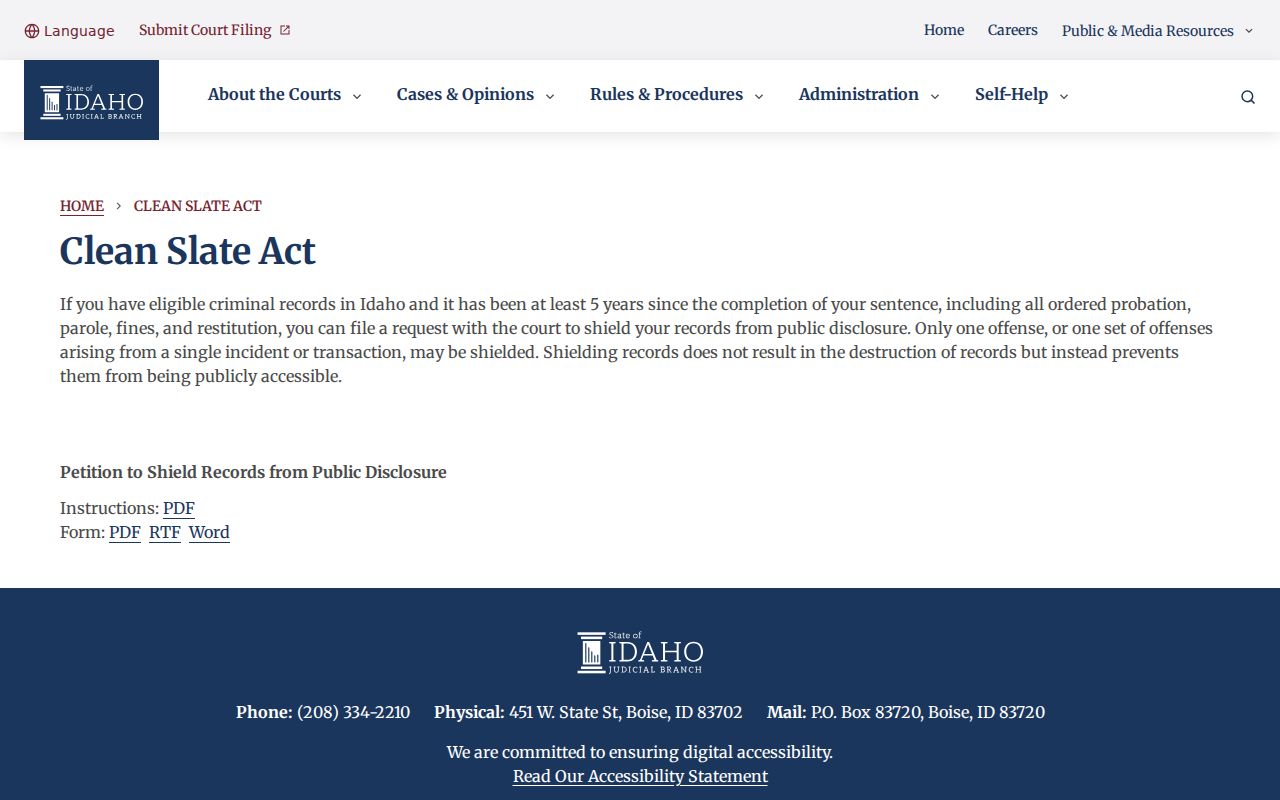
Shielding is not destruction. The defendant, courts, law enforcement, and prosecutors retain authorized access.
Jefferson Probation and IDOC Lines
Supervision records split by case level. Jefferson County Probation handles adult misdemeanors, juveniles, and court-ordered pretrial release from Suite 190 at 210 Courthouse Way. Its online initial reporting link is for people ordered to report, not a public name lookup. Officer notes and assessments are not automatically public.
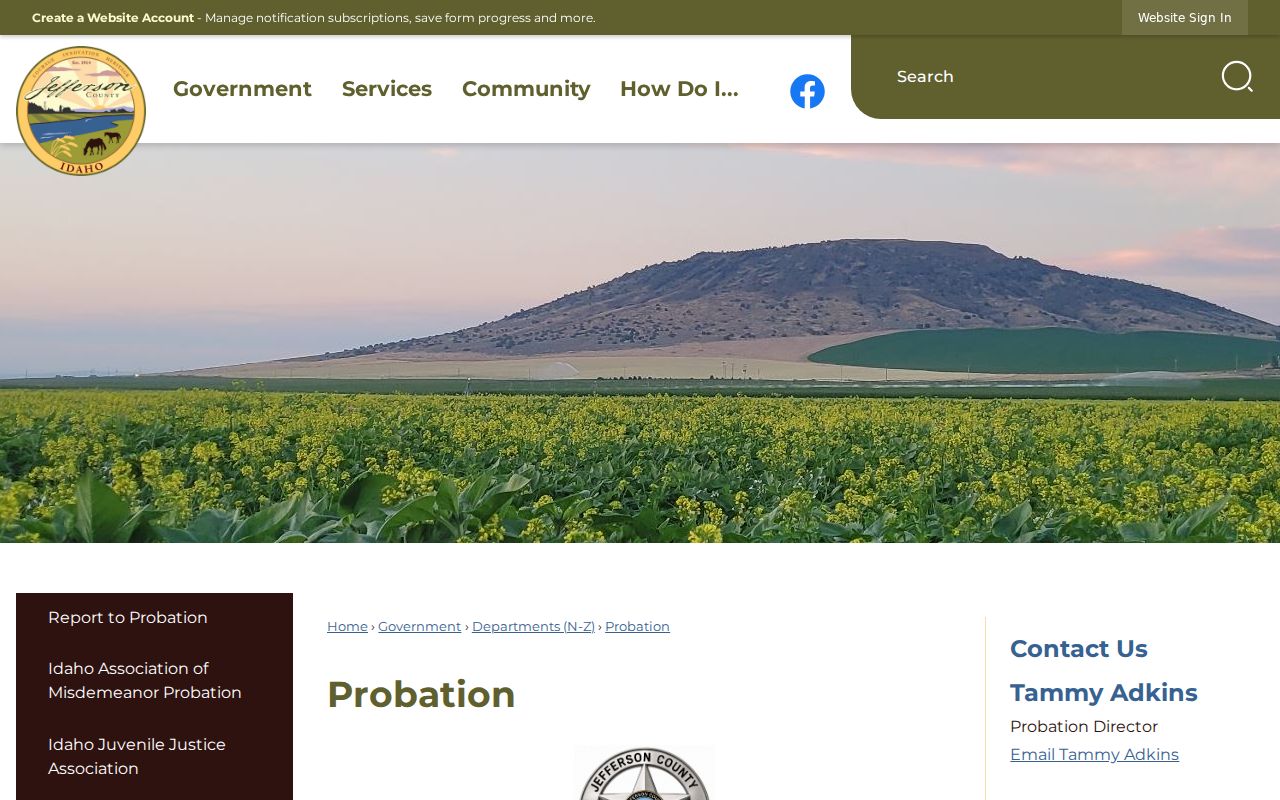
The county page confirms the local supervision lane, which differs from felony probation and parole.
IDOC supervises felony probation and parole. Its public Resident/Client Search can show an individual as in custody, in community, under an active bench warrant, or discharged. The Idaho Commission of Pardons and Parole makes parole decisions, while IDOC officers perform community supervision.
Jefferson County's Federal Record Layer
Federal cases do not appear in BCI or as complete files in Idaho iCourt. Jefferson County lies within the U.S. District Court for the District of Idaho. PACER provides federal dockets and documents, and the nearest staffed eastern clerk counter is in Pocatello. Federal custody belongs in the Bureau of Prisons locator, not the IDOC search.
The Pocatello federal clerk page gives the counter location and hours.
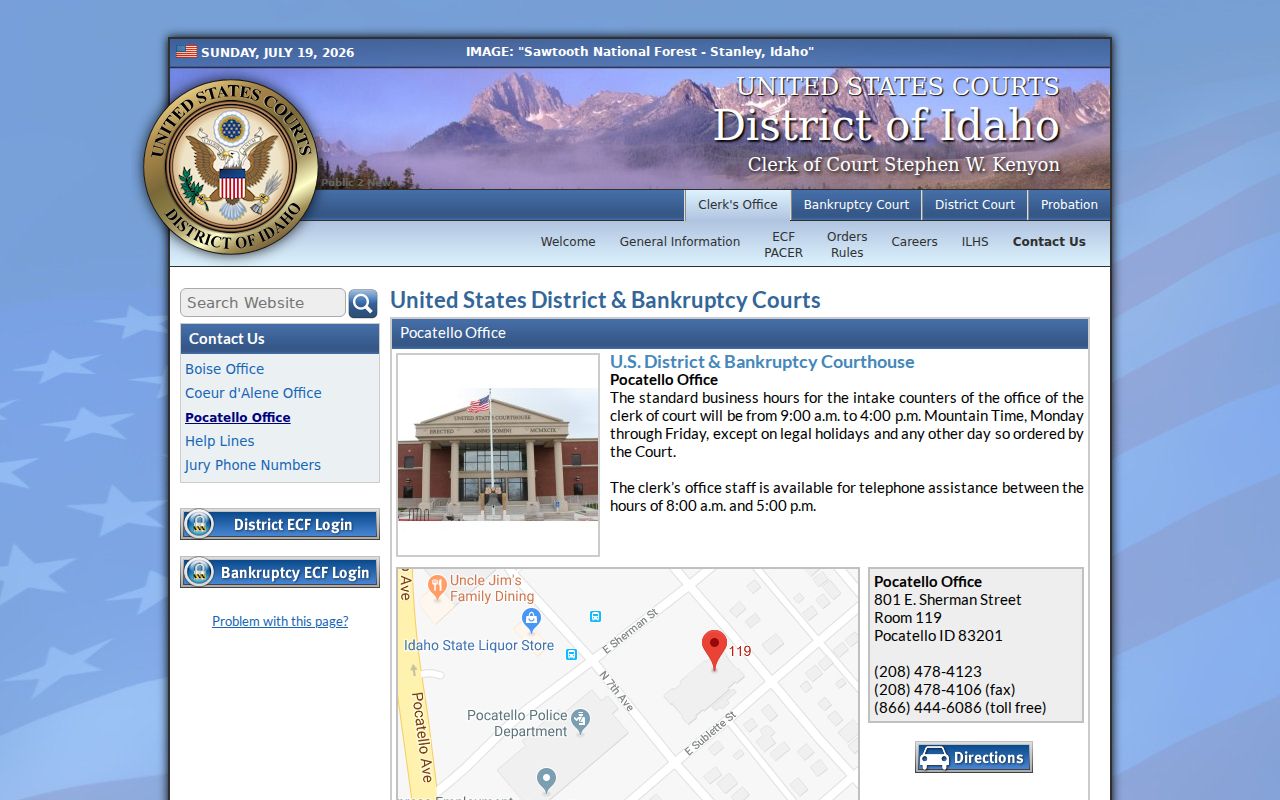
At that counter, terminal viewing is free, lobby self-prints cost ten cents per page, and clerk-made copies cost fifty cents per page. PACER charges ten cents per page, generally capped at three dollars per document or report.
Criminal Records by City in Jefferson County
City name does not always identify the custodian. Rigby has a verified police records channel, while Menan and Ririe do not. Idaho also has no municipal courts, so city misdemeanor matters route through the District Court's Magistrate Division. Ririe crosses the Jefferson and Bonneville county line, making the incident location especially important.
The official Census profile for Jefferson County provides population context for the county's cities.
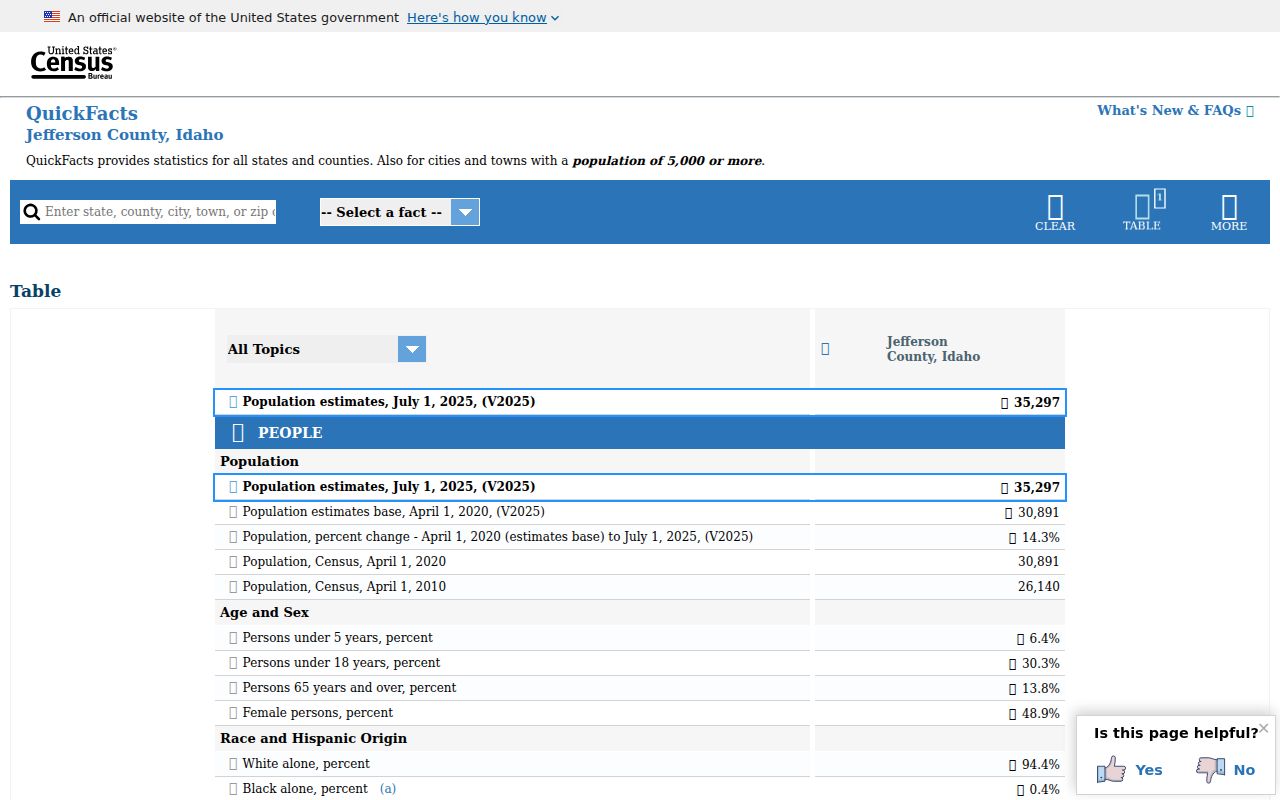
The three city guides follow the official 2020 ranking used in the research.
Rigby Criminal History
5,038 residents in 2020 · Rigby Police maintains its own report form.
Menan Criminal History
789 residents in 2020 · Law-enforcement records route to JCSO.
Ririe Criminal History
667 residents in 2020 · Confirm Jefferson or Bonneville County first.
Jefferson County's Compact Justice Hub
Jefferson County was created in 1913. Rigby residents first supplied a frame courthouse and land on a 99-year lease for one dollar per year. A two-story brick courthouse followed in 1939 and served for 68 years. The current county complex opened in 2007, placing courts, clerk, prosecutor, probation, defender, sheriff, and jail close together.
The county history page documents that local timeline.
Co-location helps with a multi-office search, but it does not merge the records or erase each custodian's access rules.
Current access is also changing. Idaho announced a replacement public court portal during 2026 because the legacy vendor was discontinuing its software. Search controls and labels may shift, so readers should use the live portal and avoid relying on an old field list. Jefferson County's clerk also changed in June 2026, when Melanie Smoot was appointed and sworn in.
Growth adds another local factor. The Census estimated 35,297 Jefferson County residents in 2025, up from 30,891 in 2020. More people and more filings still move through the same compact public counters. That does not prove any change in crime, but it can affect record traffic and makes a precise request more useful. Give the clerk or sheriff an exact date, location, agency, case number, and record type when those facts are known. Narrow details help the custodian locate the right file without turning a request into a broad search across unrelated Jefferson County records.